

Article: Stratanium Non-Stick or Stainless Steel? Heating and Cleaning SCANPAN
Stratanium Non-Stick or Stainless Steel? Heating and Cleaning SCANPAN
In this article
As the evenings get cooler, there's nothing quite like getting into the kitchen and cooking something comforting, whether that's a perfectly seared pork chop, a quick midweek meal or a batch of pancakes.
Whatever you're cooking, looking after your frying pan properly will help you get the best performance from it for years to come. However, the way you heat and clean your pan depends on its cooking surface. Our non-stick surfaces, including Stratanium and Stratanium+, have slightly different care requirements to our stainless steel cookware.
Here's our guide to getting the most from your SCANPAN frying pan.
Looking After Your Non-Stick Pans
Our non-stick cookware, including pans featuring Stratanium and Stratanium+ surfaces, is designed to make everyday cooking easier. A little care before and after cooking will help maintain its performance.
Getting the temperature right
We recommend preheating your non-stick pan over a medium heat for approximately 60–90 seconds before adding your ingredients. There's no need to turn the heat up too high to get started.
When cooking at higher temperatures with Stratanium or Stratanium+ cookware, choose an oil with a suitable high smoke point, such as grapeseed, avocado, rice bran or vegetable oil.
Cleaning your non-stick pan
Allow your pan to cool slightly before cleaning. Wash it after every use in warm to hot soapy water using a soft sponge.
For more stubborn food residue, a natural bristle or nylon brush can help. Bar Keepers Friend can also be used where appropriate.
We recommend avoiding aerosol cooking sprays, as they can leave behind a build-up of residue that becomes difficult to remove over time.
Looking After Your Stainless Steel Pans
Stainless steel cookware requires a slightly different approach, particularly when it comes to preheating.
Getting the temperature right
We recommend preheating your empty stainless steel pan over a medium heat for approximately 2–3 minutes.
To check whether it's ready, add a small drop of water to the cooking surface. If the water forms a bead and glides across the pan, it's ready for cooking. You can then add your chosen cooking oil before adding your ingredients.
Cleaning stainless steel
Occasionally, you may notice rainbow-coloured marks on your stainless steel cookware. These are known as heat tint and are a normal result of heating stainless steel.
To remove them, use our recommended stainless steel cleaner or a paste made with baking soda and water.
Avoid using oven cleaner on your stainless steel cookware.
A Few Cooking Tips for the Cooler Months
Different cooking surfaces have different strengths. Choosing the right pan for the job can make all the difference.
-
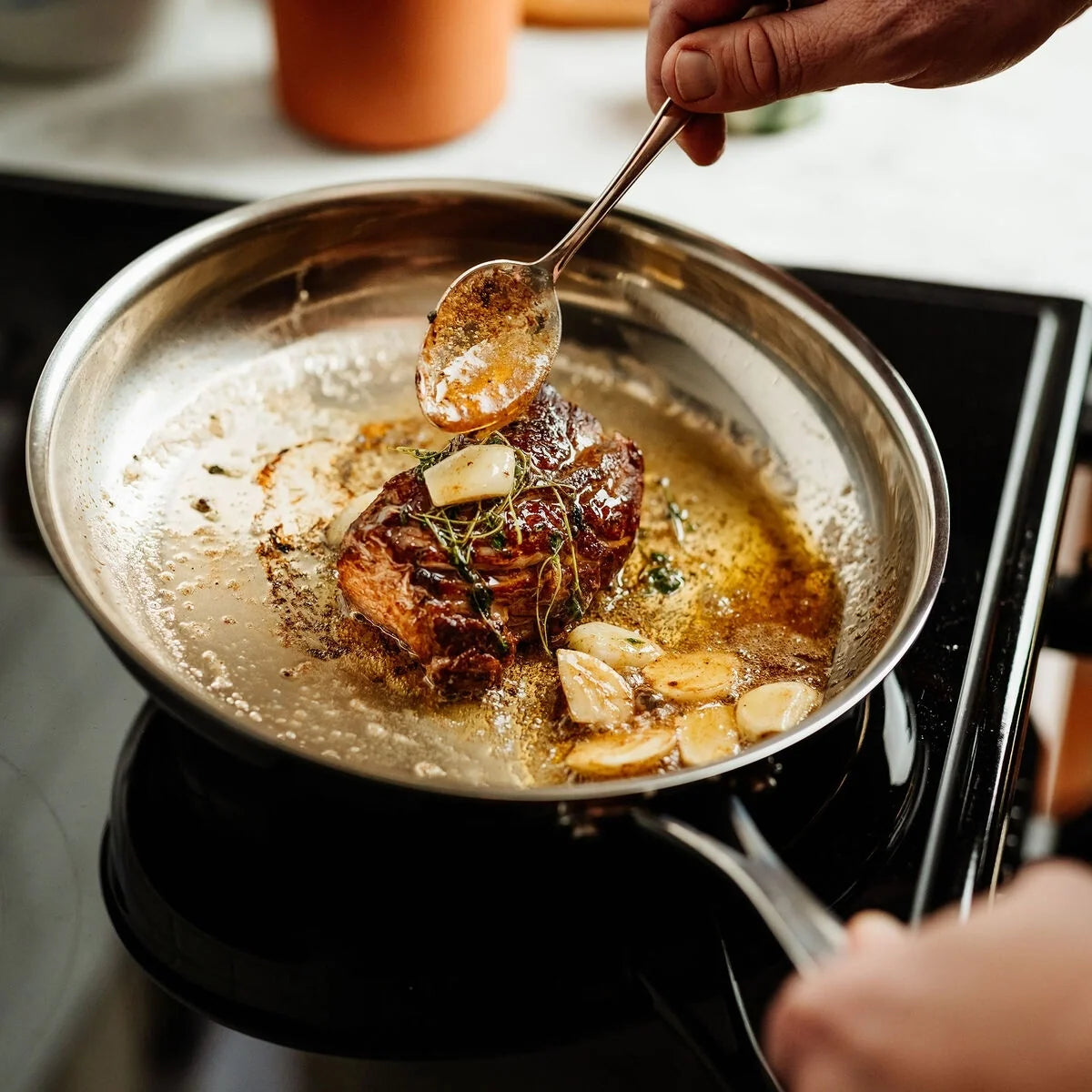
Searing pork chops and sausages: Stainless steel is a great choice when you're looking to develop a golden crust and create the delicious browned bits that can be used to make a pan sauce.
-
Cooking eggs, fish and pancakes: Our non-stick cookware makes turning and releasing delicate ingredients easier, with less need for additional oil.
-
Cleaning after cooking: Allow your cookware to cool slightly before washing. Avoid plunging a hot pan into cold water, as sudden temperature changes can cause thermal shock and potentially affect the pan.
Looking After Your Lids and Cooking Accessories
It's not just your frying pans that benefit from a little extra care.
Our lids are oven safe up to 260°C (500°F), but should never be placed directly onto a cooking surface. Avoid placing a hot lid onto a cold surface, as sudden temperature changes can cause damage.
For everyday cleaning, use hot soapy water and a soft cloth.
Our silicone-headed utensils, such as spatulas and pastry brushes, are dishwasher safe. However, utensils with wooden handles should always be washed by hand.
A Little Care Goes a Long Way
Whether you're using one of our non-stick frying pans or cooking with stainless steel, understanding how to heat, use and clean your cookware will help you get the best out of it.
Every SCANPAN range has its own characteristics, so we always recommend checking the care instructions supplied with your cookware for specific guidance.
Good cookware deserves good care. Look after your SCANPAN, and enjoy making the most of it every time you cook.
Please note: Some of the guidance above is based on our US care recommendations. Specific instructions and limitations may vary between markets and cookware ranges. Always follow the user guide supplied with your product where it differs.

 template--28239662121335__featured_collection_premium_47CAaR__img2

 template--28239662121335__featured_collection_premium_47CAaR__img2


 template--28239662121335__featured_collection_premium_47CAaR__img2

 template--28239662121335__featured_collection_premium_47CAaR__img2


Leave a comment
This site is protected by hCaptcha and the hCaptcha Privacy Policy and Terms of Service apply.